
What Is a Tally Counter? The Complete Guide to History, Types, and Clickers
Introduction
Long before smartphones existed, people needed a reliable way to count things they couldn’t easily track in their heads — birds passing overhead, visitors entering a building, laps completed on a track. The tool built for exactly that job is called a tally counter, and despite how old the concept is, it’s still one of the most useful pieces of equipment for anyone who needs an accurate running total.
This guide covers where the idea came from, how the modern digital version works, and how to pick the right one for what you’re counting. If you’d rather skip ahead and try one immediately, a free browser-based counter is available with no download or signup required.
Table of Contents
What Is a Tally Counter, Exactly?
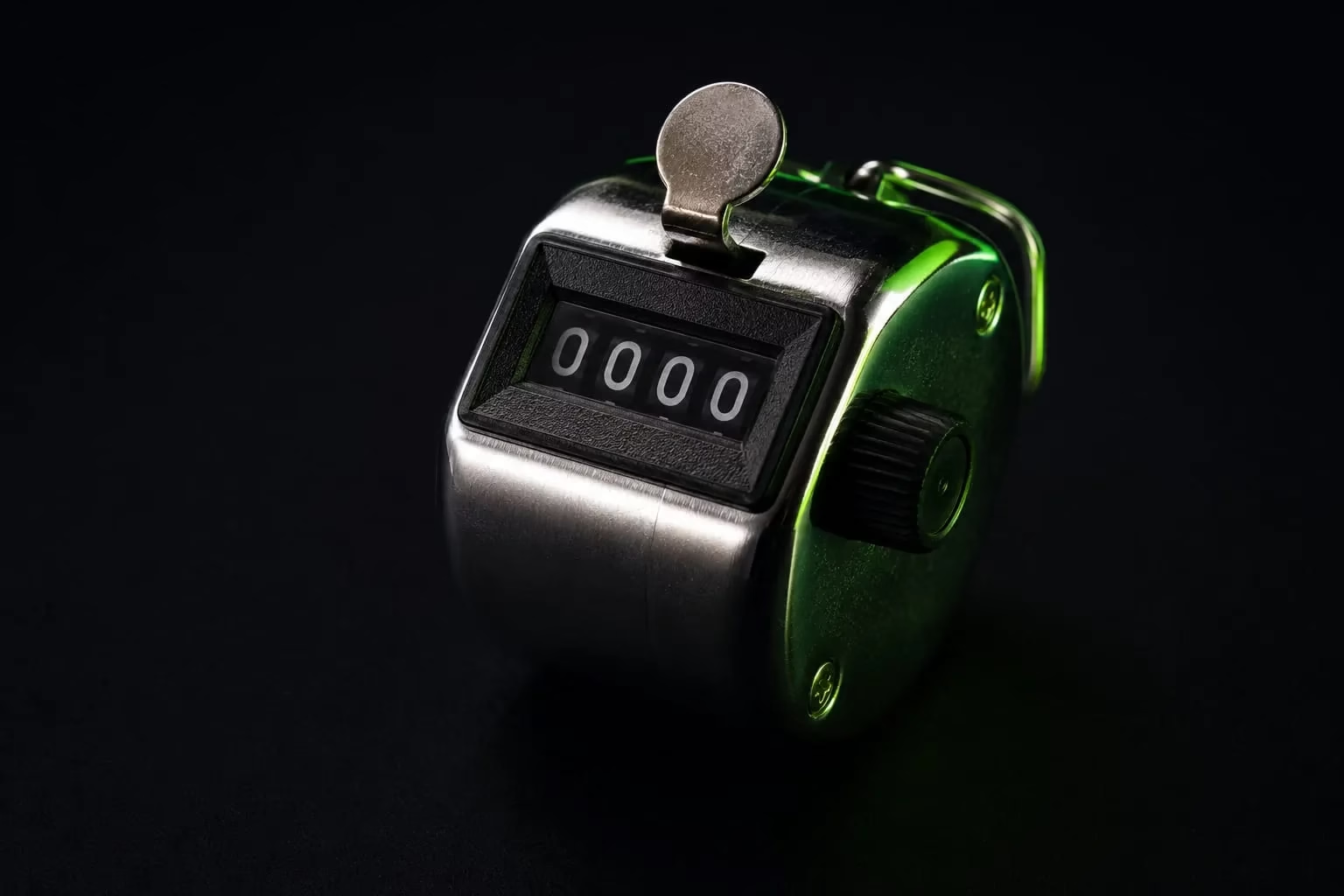
A tally counter is any device — mechanical, digital, or purely notational — used to keep an accurate running total of repeated events by adding one unit at a time. The core idea is always the same: instead of trying to hold a growing number in your memory, you offload that task to something external, whether that’s a scrap of paper, a spring-loaded mechanical dial, or a piece of software running in your browser.
The term applies broadly. A golf umpire clicking a small handheld device to track strokes is using a tally counter. So is a librarian marking visitor entries on a clipboard, and so is someone tapping a button on their phone to count repetitions during a workout — or reciting SubhanAllah on a digital tasbih.
Where the Word “Tally” Comes From
The word traces back to the Latin talea, meaning a stick or rod, tied to an old accounting method known as the tally stick — a piece of wood notched to record debts, payments, or quantities, sometimes split in half so both parties held a matching record. England’s exchequer used tally sticks for tax records for centuries, and the practice only formally ended in the 1800s.
That history is why “tally” survives today as shorthand for “keep count of” — a linguistic fossil from a system that predates modern paper record-keeping entirely.
Tally Marks: The Original Counting System
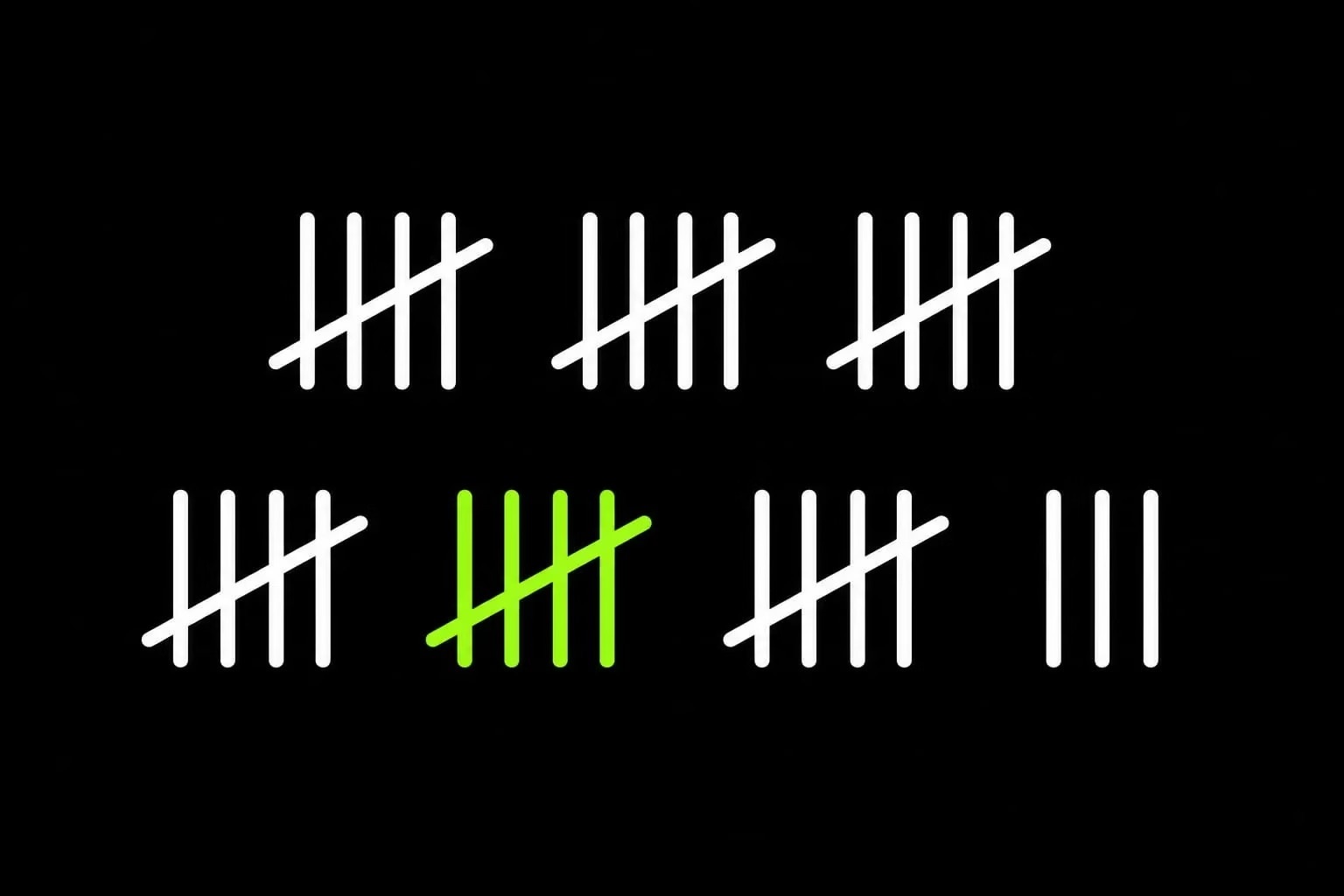
Before any mechanical device existed, people used tally marks — small strokes drawn to represent each unit counted. The most widely recognized version today is the five-bar gate method: four vertical strokes followed by a diagonal line crossing through them, grouping every count into clusters of five for fast visual reading.
This system shows up everywhere from courtroom vote counts to prison-wall depictions in film and television, precisely because it solves the same underlying problem a tally counter does — making a large number legible at a glance rather than forcing someone to count individual marks one by one.
The Mechanical Hand Counter
The physical, spring-loaded device most people picture when they hear “tally counter” emerged as a refinement of tally marks — a small handheld unit with a thumb-operated lever, a set of rotating number wheels, and often a reset dial on the side. Each press of the lever advances the display by one, using the same mechanical principle found in odometers.
These devices became standard equipment for bouncers counting venue capacity, bird watchers logging species sightings, and factory floor supervisors tracking units produced — anywhere a precise count mattered more than convenience, and where battery-powered electronics weren’t practical or available.
Click Counter, Clicker, or Counter Clicker: What’s the Difference?
You’ll come across several near-identical names for this category of tool: click counter, clicker counter, counter clicker, and simply “clicker.” These aren’t distinct product types — they’re regional and generational variations on naming the same basic function, similar to how “soda” and “pop” describe the same drink depending on where you’re from.
What actually varies between them isn’t the name, but the form factor:
- Handheld mechanical clickers — the classic pocket-sized device with a thumb lever
- Digital handheld counters — battery-powered, with a small screen instead of rotating wheels
- Software-based counters — apps or browser tools that replicate the same tap-to-increment function on a phone or computer screen
How a Digital Tally Counter Works
A digital tally counter takes the exact same concept — one input, one increment — and moves it onto a screen. Instead of pressing a mechanical lever, you tap a button, and software adds one to a stored number displayed in real time.
The functional upgrade over mechanical counters is real:
- No moving parts to wear out or jam
- A visible target/goal, so you know exactly when you’ve reached a specific number
- Auto-save, meaning your count survives even if you close the app or browser tab
- Custom step values, letting each tap represent more than one unit (useful for counting in batches of five or ten)
Using a Tally Counter for Dhikr
Dhikr counting is really just a specialized case of tallying: a fixed target (33, 99, or 100) and a running total, the same two things any tally counter provides. The difference is purpose, not mechanism — a tasbih counter is simply a tally counter pointed at SubhanAllah, Alhamdulillah, or the 99 Names of Allah instead of laps or reps.
If you’re switching between counting dhikr and counting something else entirely — reps, headcounts, inventory — the same counter handles both without needing a separate tool for each. Set your target, tap, and the tool doesn’t need to know or care whether you’re counting Allahu Akbar or squat reps.
Common Uses Across Different Fields
The same underlying tool adapts to a wide range of situations, which is part of why it’s remained relevant across so many industries:
| Field | Typical Use |
|---|---|
| Sports & coaching | Tracking scores, drills completed, or player rotations |
| Fitness | Counting repetitions across sets without losing track mid-workout |
| Tasbeeh & dhikr | Counting Tasbihat Fatima (RA) or the 99 Names against a set target |
| Retail & inventory | Verifying stock counts during audits or restocking |
| Education | Tracking classroom attendance or quick participation counts |
| Crafts | Counting rows in knitting or crochet patterns |
| Personal habits | Counting repeated practices, from language drills to daily routines |
Choosing Between a Physical and a Digital Counter
Neither option is objectively better — the right choice depends on context:
A physical mechanical counter makes sense when:
- You need something that works with zero setup, no charging, and no screen
- You’re counting in an environment where a phone isn’t practical (wet conditions, gloved hands, low light)
A digital counter makes sense when:
- You want a visible target and automatic tracking toward it
- You’re resetting and retargeting often — moving from one count to the next without carrying extra gear
- You want your progress saved automatically, without carrying a separate device
Many people end up using both, depending on the task — a physical clicker at a busy event door, and a digital counter for anything involving a target number, like a dhikr session or a set of reps.
This same handoff — from manual tracking to a more reliable external system — echoes centuries-old record-keeping methods like the tally stick, which served the exact same purpose long before mechanical or digital counters existed.
What to Look for in a Digital Counter
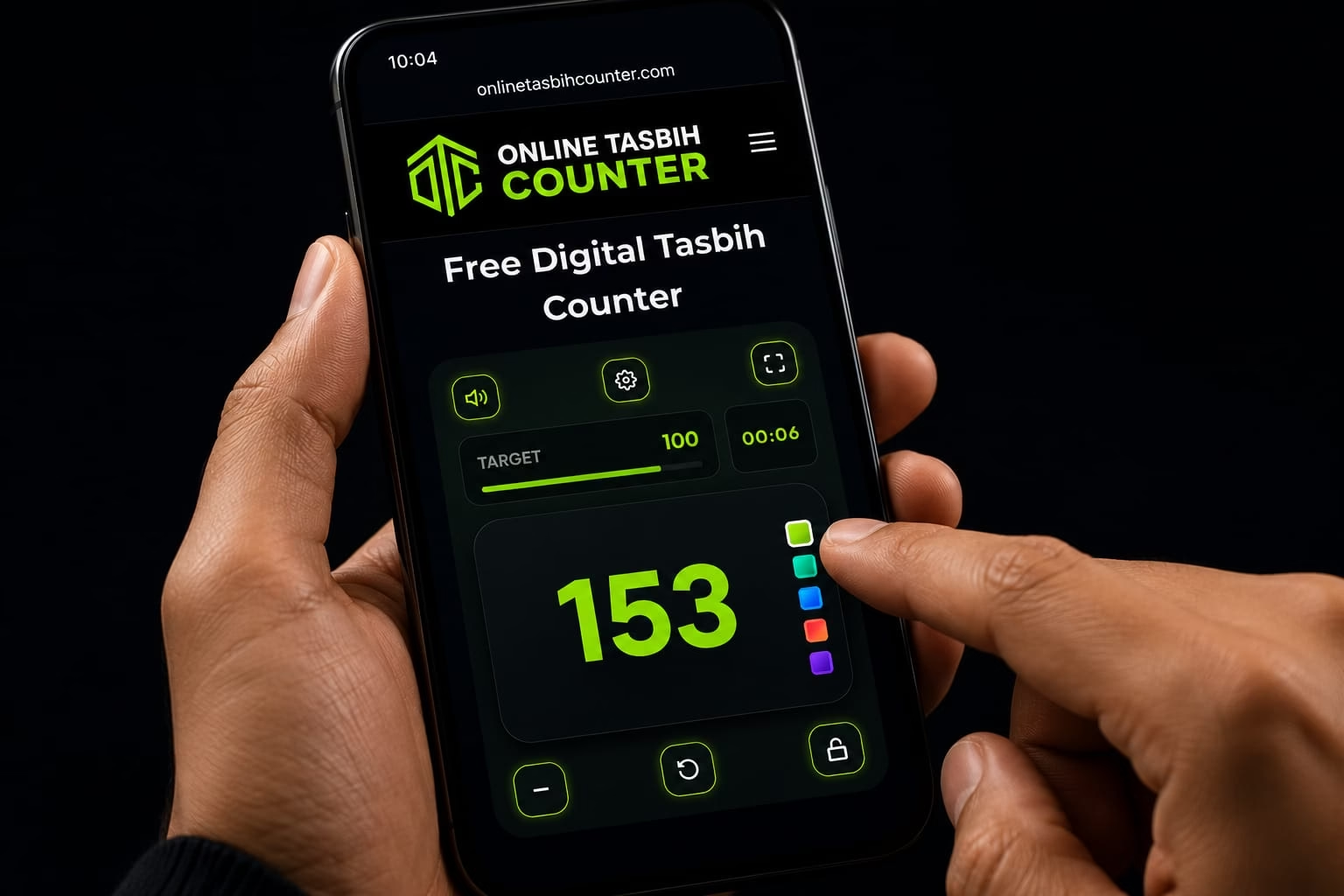
If you’re comparing digital counters, a few things actually make a difference in daily use, whether you’re counting dhikr, reps, or anything else:
- A visible, glanceable number — large enough to read without stopping what you’re doing
- A customizable target, so the tool tells you when a goal is complete rather than requiring you to track it yourself
- An undo function, to correct an accidental extra tap without resetting the entire count
- No account requirement — for a task this simple, signing up for anything is unnecessary friction
OTC’s counter covers all four, along with sound alerts, full-screen mode, and five color themes.
Frequently Asked Questions
What’s the difference between a tally counter and a click counter?
Nothing functional — both terms describe the same category of tool. “Click counter” tends to emphasize the digital or button-press version, while “tally counter” is the more traditional, broader term covering both mechanical and digital forms.
Where did tally marks originate?
Tally marks are one of the oldest known counting methods, predating written numeral systems. The modern five-bar gate grouping (four strokes plus a diagonal) is a relatively recent convention, but the underlying idea — one mark per unit — goes back to some of the earliest recorded counting systems in human history.
Can a digital tally counter replace a physical one entirely?
For most everyday purposes, yes. The main scenario where a physical device still has an edge is in conditions where a touchscreen is impractical — wet environments, thick gloves, or situations requiring tactile confirmation without looking at a screen.
Do I need to download an app to use a digital tally counter?
No. Browser-based counters work directly in any modern web browser, on desktop or mobile, without installation. This is often the fastest option if you just need to count something once, rather than committing to a dedicated app.
What does “step” mean on a digital counter?
The step value determines how much each tap adds — normally one, but adjustable so a single tap can represent a batch (for example, five items at once), which speeds up counting large quantities.
Can I use a tally counter to count dhikr?
Yes — a tasbih counter is simply a tally counter used for dhikr. Set the target to 33, 99, or 100 depending on what you’re reciting, and the mechanism works identically to counting reps or headcount.